|
Background.
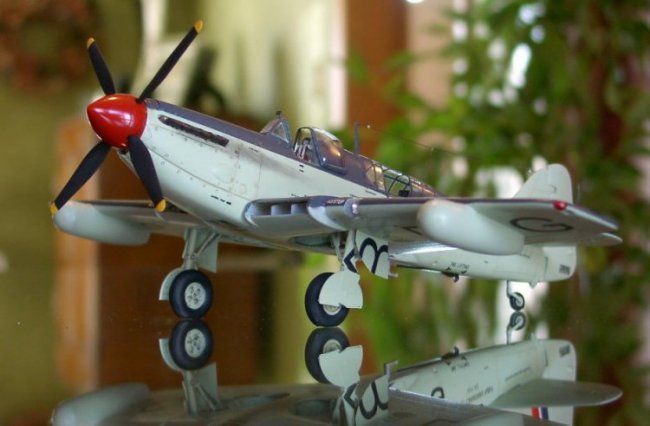
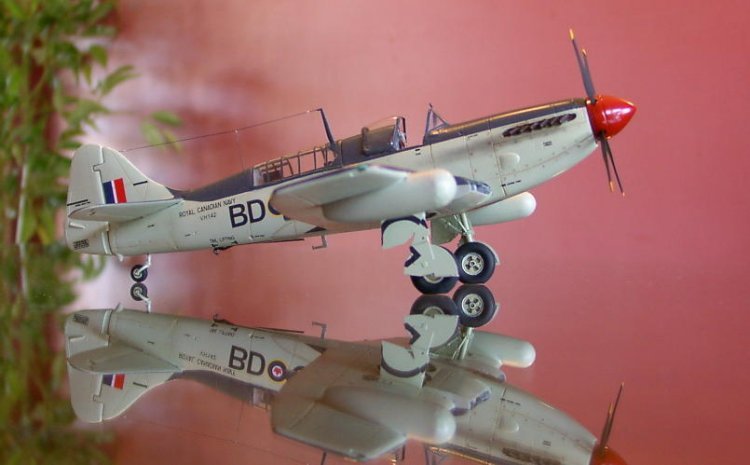
I was asked to build this kit
for a gentleman who was involved in the restoration of the Fairey Firefly AS6
currently housed at the Canadian Warplane Heritage Museum in Hamilton, Ontario.
The kit is resin, photo etch, white metal and a vac formed canopy.
At first glance it appears to be very detailed, an impression later borne
out in construction. The
instructions mention that this kit is heavily based on the PP Aerokits vacform
kit of the same aircraft, but using injected resin for the airframe parts.
My research, which was
considerably aided by the wealth of information supplied by my “customer”,
indicated that the AS6 differed from a MK5 only in the addition of the radome on
the starboard wing and the removal of the wing cannons and gun site.
The only other deviation from the kit instructions was to be the decals
for the specific aircraft I was building.
Construction.
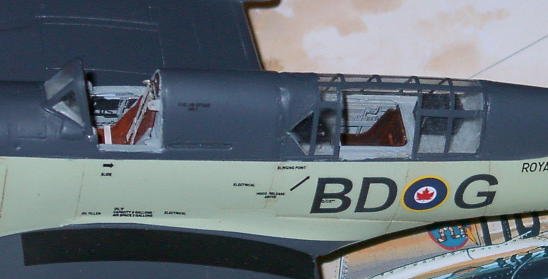
Construction began with the cockpits,
for both the pilot and observer. These
are entirely photo-etch. I had
photographs of the real aircraft and for the most part they matched the kit
instructions. Whenever there was a
difference, I went with the photos. This
work required much patience with very small parts!
The radios in the observer’s office were metal castings requiring a
little clean up, but apart from that, this phase went quite well.
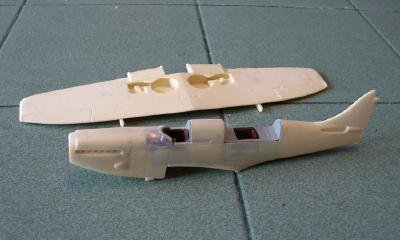
Once I was happy with the cockpits,
they were installed in the fuselage half ready for closing.
The location is a little vague, however with care no problems should be
encountered. Upon offering the two
halves together, I found some gaps, but nothing too bad.
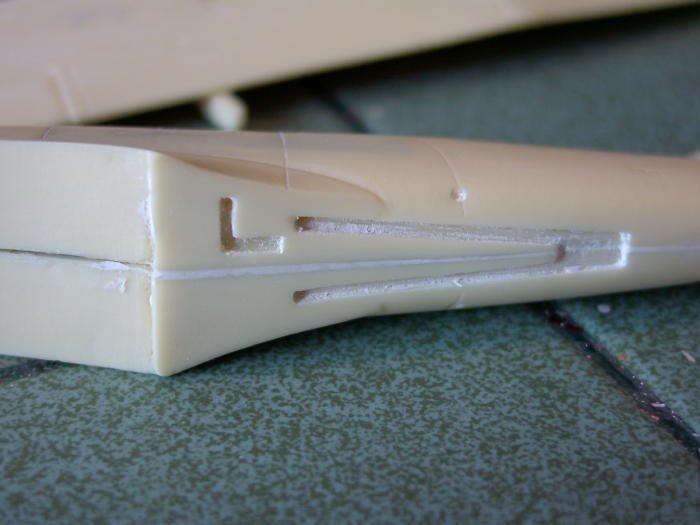
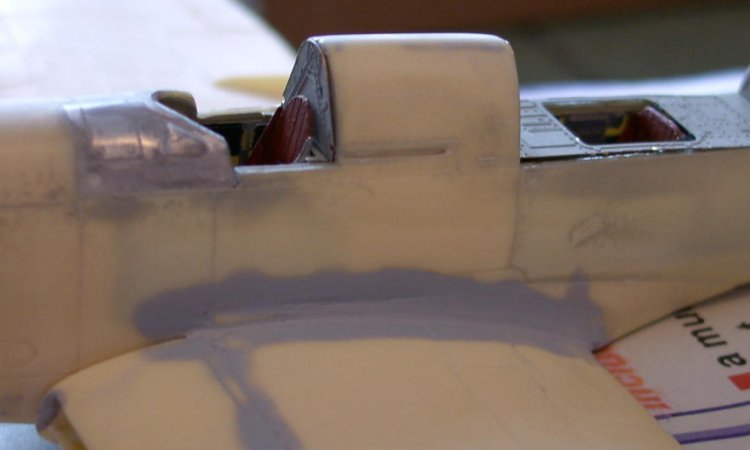
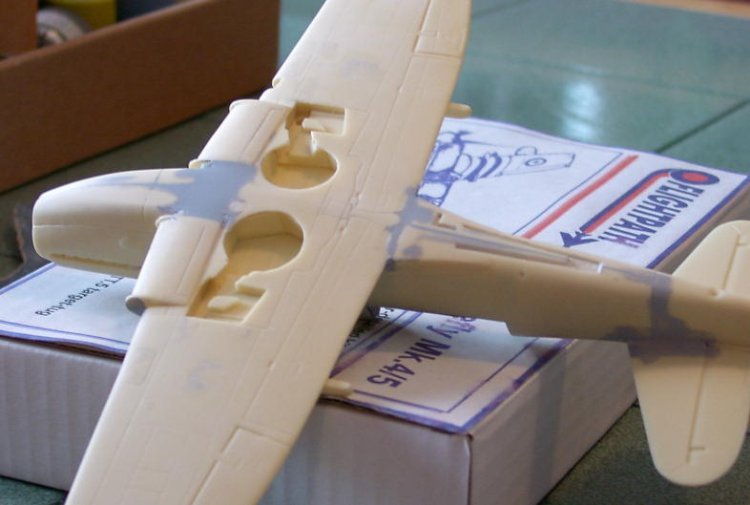
Once the fuselage was joined I tried a test fit of the one-piece wing. I
had previously removed the cannon bulges on the upper surfaces of the wing,
filled the spent shell ejection shoots underneath and filled the location holes
on the leading edges. The wing initially wanted to sit about 10 degrees out of
square with the fuselage and not nearly horizontally.
I had to remove (and add where appropriate) lots of material to get the
wing to sit properly. Unfortunately,
during this phase some detail was lost on the under side.
Conversely, the horizontal stabilisers required minimal clean up and
located very nicely in the fuselage with very little filler required to fair the
join in. I attached the port
auxiliary fuel tank and the starboard radome next, both fitting quite well.
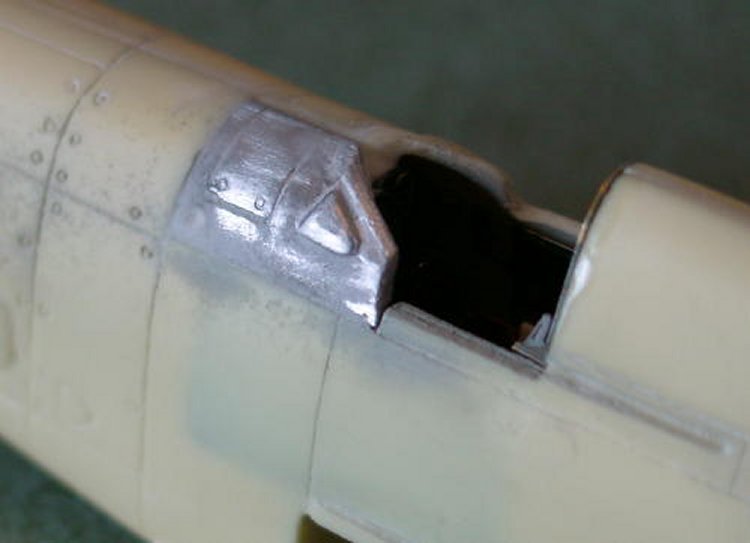
The last piece of the basic airframe is a small metal piece just forward
of the windshield on the port side. I’m
not sure why this wasn’t part of the fuselage moulding; it did require a fair
bit of work to blend in. Finally,
before painting I carefully cut out the canopies, masked them and fitted them to
the fuselage.
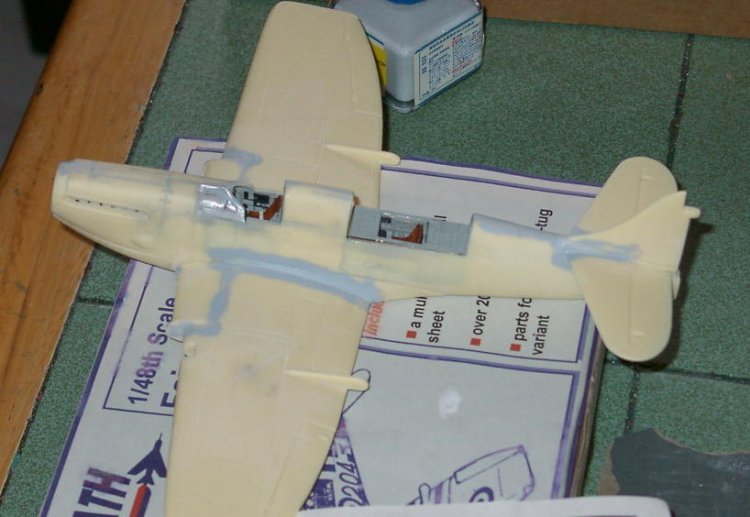
With the basic construction
complete, I finished up the seams. I
used a combination of Squadron white putty, Testors white putty, CA glue and
Mr.Surfacer 1000 to complete the seam clean up. All were sanded with 600 wet n’ dry then finished with 1000
grit.
Paint.
|
(click on
the image below to load the full size photo) |
 |
 |
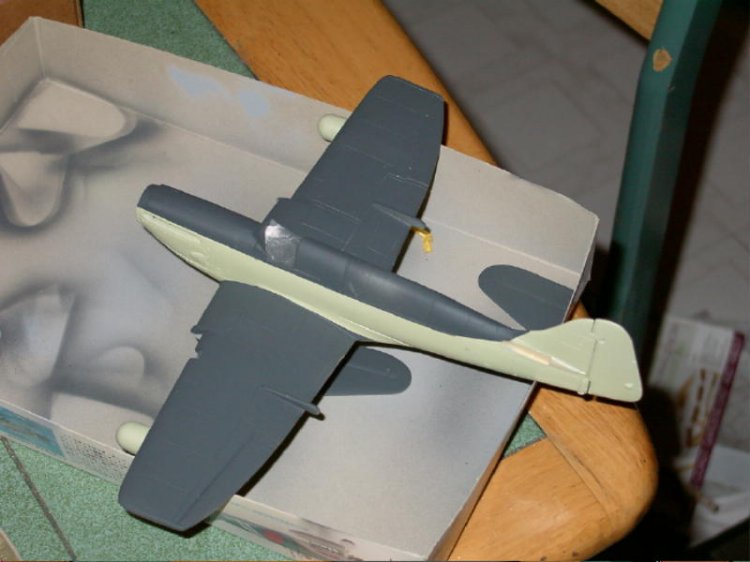
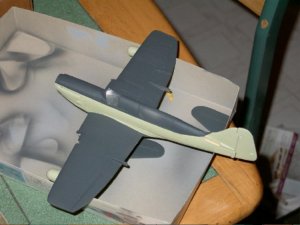
I began by spraying with
Mr.Surfacer 1000 thinned with lacquer thinner.
This showed a couple of areas that needed a little more work.
Once that was taken care of, I began on the colours.
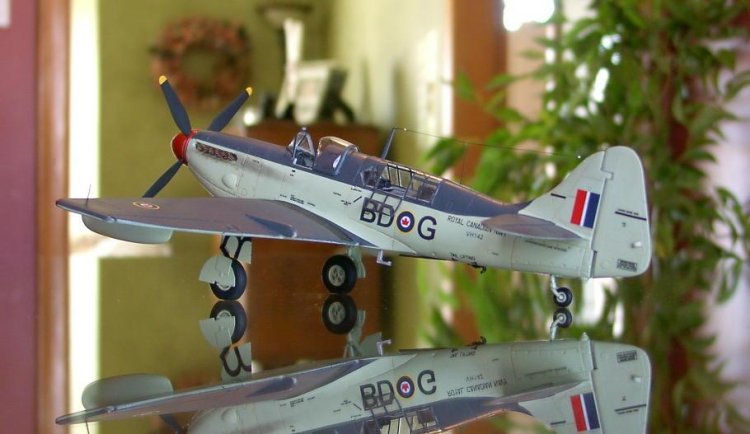
The aircraft I was building served in the RCN with a basic scheme of
Extra Dark Sea Grey over Sky. The
Sky was put on first (all paints used were Gunze).
I’ve found that best results with Gunze happen if I leave it for at
least a couple of days to cure before handling, so when the sky was completed I
waited three days before continuing. I
masked with a combination of Tamiya tape and blue tack and painted the grey. I wasn’t happy with the tail area and eventually removed
the horizontal stabilisers to ease the masking, re-sprayed, and then reattached
them. After letting the grey cure,
I applied the Future in preparation for the decals. In addition, while I sprayed each of the two main colours I
painted much of the rest of the components such as the under-carriage and doors,
antennas, etc.
Decals.
|
(click on
the image below to load the full size photo) |
 |
 |
I used the kit decals for all
stencilling. There are very many,
and as there is no separate carrier film for each one, I was very careful
cutting them out to minimise the clear film.
The kit decals went down very well, I found I didn’t need setting
solution. The only problem I
encountered was that they seemed to have a higher than normal tendency to curl
over into themselves, though that might have just been me.
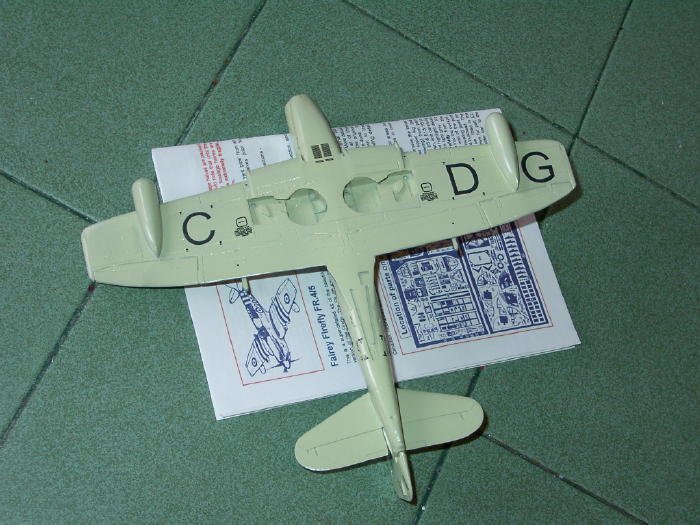
I made the squadron codes,
serial number, and a tiny “Canadian Warplane Heritage” decal myself.
This was fairly straightforward, I printed the fuselage and underwing
codes I made on my PC onto clear decal paper that I then protected with microsol
clear decal film.
The roundels were a bit of a problem
at first. There is a dearth of
Canadian decal sheets for the early 1950’s with the required specification of
roundel, with the yellow outline. It
was around this time I wandered into the hobby shop and found a new (to me)
release of the HobbyCraft Sea Fury with box artwork showing a Canadian Sea Fury
with the correct roundel style (unlike the original release which only had the
other, incorrect for the Firefly, style). I
asked Trevor if he’d open the box so I could confirm they were correct by
style and size without being committed to buying the kit and he said “sure”
– I’m a very good customer! Anyway,
they were and I bought the kit and solved the roundel problem. My wife, however, didn’t believe I had to buy the kit just
for the decals!
Once decaling was complete, I misted
on a couple more light coats of future to seal them. I applied a light wash of artist oil burnt umber thinned with
turps, and then I used Dullcoat to bring the finish down to a semi-gloss sheen.
More
Construction and Finish.
|
(click on
the image below to load the full size photo) |
 |
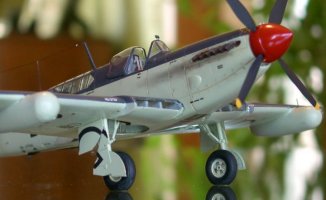 |
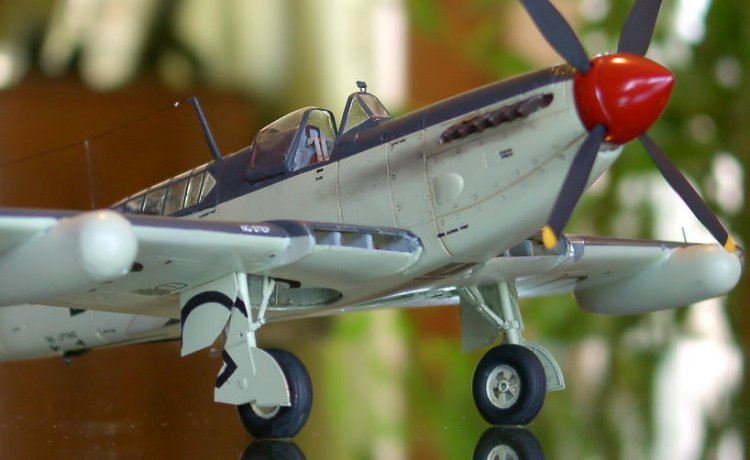
Next I completed the installation of
the undercarriage which is all cast metal and photo-etch.
I used aluminium foil for the chrome parts (I can’t remember the proper
name for them). I used foil for the
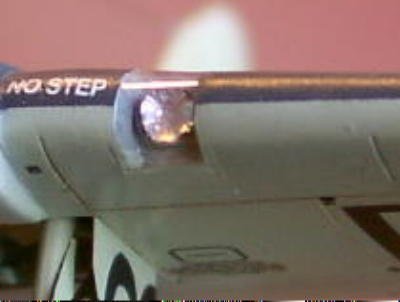
reflector in the landing light too. The
landing light cover is clear scotch tape that I cut very carefully to size
(which took about 20 attempts) and “glued” with semi-cured future.
I like the scale thinness of doing it this way, but it can get very
frustrating!
I used painted clear decal film for
the framing on the observer’s canopy. This
was the first time I’ve tried this technique and found it to be very
effective, right down to the scale thickness of the decal film for that very
slightly raised look.
I attached exhausts and the antenna
post at the correct angles next. I
have some sprue from a dollar-store kit my son had once that is black, very soft
plastic that stretches thinner than any other I’ve tried.
I used this for the antenna, attaching it with white glue, which I also
used for the insulators.
My “customer” wanted the plane to
be very lightly weathered so I did very little aside from pastels for exhaust
staining. Suddenly it was finished!
Conclusion.
This is a very extensive kit, which
with a reasonable amount of care and diligence, will build up to a very nice
looking representation of a classic aircraft.
My rendition is not perfect, in fact I was still touching up on the day I
delivered it to its owner. Given
the same opportunity again I’d do quite a lot differently (which I may get as
I hear the pilot of the museum aircraft may want one made for him too) but
overall I am pleased with the result.
The whole project happened over 4.5
months, with about 130 hours work plus several more on research.
I have several people to thank, in no
particular order:
Denis Keegan, Hugh Gilliland, Brent Hamre, Tony Hayes.
Mark
|